
Weight loss that lasts: losing fat, keeping muscle, and keeping it off
The short answer
- Small losses matter: 5–10% of body weight improves blood pressure, blood sugar, triglycerides and liver fat at the same time.
- Aim to lose fat, not just weight: about 0.5–1% of body weight a week, 1.6–2.2 g of protein per kg, and resistance training keep the loss coming from fat.
- There’s no single best diet. Low-fat and low-carb work about equally well; the plan that fits your life is the one that works.
- Plan for keeping it off from day one: habits you can maintain beat aggressive tactics you’ll drop.
Overweight and obesity, and why they matter
About 4 in 10 American adults have obesity. Excess body fat, and especially the visceral fat stored around the organs, drives insulin resistance, which in turn drives fatty liver, high blood sugar, high triglycerides and high blood pressure. That’s why weight is the common lever for all of them.
Measuring it: beyond the scale
| Measure | What it tells you | Limits |
|---|---|---|
| BMI | 25–29.9 is overweight; 30 or higher is obesity | Can’t tell fat from muscle |
| Waist circumference | Over 40 in (men) or 35 in (women) signals higher risk | A proxy for abdominal fat |
| DXA scan | Fat, lean mass, bone and visceral fat, by region | Needs a scan, done every few months at most |
The scale mixes fat, muscle, water and glycogen. A DXA scan shows whether you’re actually losing fat and keeping muscle, which is the whole point. See What is a DXA Scan? and real client results measured by DXA.
Why 5–10% is the number to aim for first
In people with overweight and type 2 diabetes, losing just 5–10% of body weight meaningfully improved blood sugar, blood pressure, triglycerides and HDL cholesterol, and larger losses brought larger benefits. You don’t need to reach a "goal weight" to get healthier.
How to lose fat, not muscle
1. A moderate deficit at a sustainable pace
Energy balance is the foundation: you lose weight when you take in less energy than you use. But the pace matters. Losing about 0.5–1% of body weight a week preserves more muscle, keeps training quality up and lets you eat filling meals. Crash diets mostly lose water and glycogen at first, cost more muscle, and tend to snap back. See How Fast Can I Lose Fat?
2. Enough protein
Protein is the most filling nutrient, takes the most energy to digest, and protects muscle in a deficit. A good range for most active people losing weight is 1.6–2.2 g per kg of body weight a day. Hitting it consistently matters more than hitting it perfectly.
3. Resistance training
Lifting weights (or other resistance training) is the signal that tells your body to keep its muscle while it loses fat. Pair it with enough protein and the weight you lose comes mostly from fat.
4. Fiber, whole foods and a supportive environment
Fiber and minimally processed foods fill you up for fewer calories; in a tightly controlled trial, people ate about 500 more calories a day on an ultra-processed diet. Set up your kitchen, office and car so the easy choice is the good one (see Nutrition Architecture).
5. A plan that fits your life
In the DIETFITS trial, healthy low-fat and healthy low-carb diets produced almost the same weight loss after a year. The best diet is the one that fits your schedule, preferences and culture, and that you can repeat on busy weeks, holidays and travel.
Weight loss medications (GLP-1s)
GLP-1 medications like semaglutide and tirzepatide are the most effective obesity medications we have, and they work best with good nutrition and training alongside them. You may have heard they cause muscle loss. Here’s the fuller picture.
- Losing muscle isn’t unique to these drugs. Any long stretch of eating less than you burn costs some muscle unless something tells the body to keep it, and resistance training is that signal. A 2026 review of 20 randomized trials found that lean mass made up a similar share of the weight lost with these medications (about 25–35%) as with diet-and-lifestyle programs (about 26%), and the smallest share (about 18%) when lifestyle programs included resistance training.
- The big drug trials didn’t include resistance training. Participants got diet counseling and a general goal of about 150 minutes of activity a week, or, in one study, no exercise guidance beyond usual care. No one was lifting on a structured program, so these trials show what happens without the one thing best proven to protect muscle.
- "Lean mass" overstates muscle loss. The lean mass a DXA scan reports includes water, glycogen, organs and connective tissue; skeletal muscle is only about half of it. Studies that measured muscle directly with MRI found thigh muscle fell roughly in line with the amount of weight lost, while fat stored inside the muscle went down, a sign of better muscle quality. Short-term studies have found grip strength and sit-to-stand performance generally held up.
- Resistance training works during weight loss. In diet studies, adding resistance training prevented most of the lean mass loss in older adults with obesity. With a GLP-1 medication, in people who had just lost weight on a low-calorie diet, liraglutide plus a supervised exercise program (mostly vigorous cardio with some circuit training) preserved lean mass and produced about twice the fat loss of either one alone. Trials of semaglutide and tirzepatide with structured resistance training are under way.
- Still to learn: long-term strength and function data, especially for older adults, who have less muscle to spare.
The takeaway isn’t to avoid these medications; it’s to use them well. Because they blunt appetite so much, it’s easy to under-eat protein. Prioritize protein, lift weights two to three times a week, and build eating habits you can keep if the medication is ever reduced or stopped.
Keeping it off
Weight regain is common when the methods used to lose weight look nothing like real life. The more your weight-loss phase resembles a routine you could keep (normal foods, flexible meals, room for social life), the easier the move to maintenance. Plan that transition before you reach your goal, not after.

It rarely comes alone
Overweight, fatty liver, high cholesterol, high blood pressure and high blood sugar share the same roots: insulin resistance and excess fat around the abdomen and organs. That's why they tend to show up together, and why one well-built nutrition plan improves several at once.
Fatty liver (MASLD / NAFLD)
One of the most common liver conditions, and often reversible.
High cholesterol
Lower LDL with food, not just medication.
High blood pressure
Bring your numbers down with what you eat.
High blood sugar & type 2 diabetes
Prediabetes and type 2 diabetes respond to nutrition.
Metabolic syndrome
When several of these show up together.
Articles to read next

How Fast Can I Lose Fat?
A registered dietitian gives you the evidence-based answer to the question "How Fast Can I Lose Fat?".
How Much Protein Should I Eat During Weight Loss
Learn how much protein you actually need during weight loss from a registered dietitian.
Which Diet is the Best for Weight Loss?
Find out the "perfect diet" from a registered dietitian, an evidence-based answer.
Sustainable Weight Loss – Redesigning Your Lifestyle
An evidence-based, sustainable weight loss system that will deliver long term results, created by a registered dietitian.

Avoiding Over-Restriction During Weight Loss
Gain insight from a registered dietitian on how to lose weight in a sustainable fashion, and avoid common mistakes.
Losing Weight Fast – 3 Reasons to Not
Fast weight loss isn’t always fat loss. Learn why a slower, more sustainable approach leads to lasting results, from a registered dietitian.
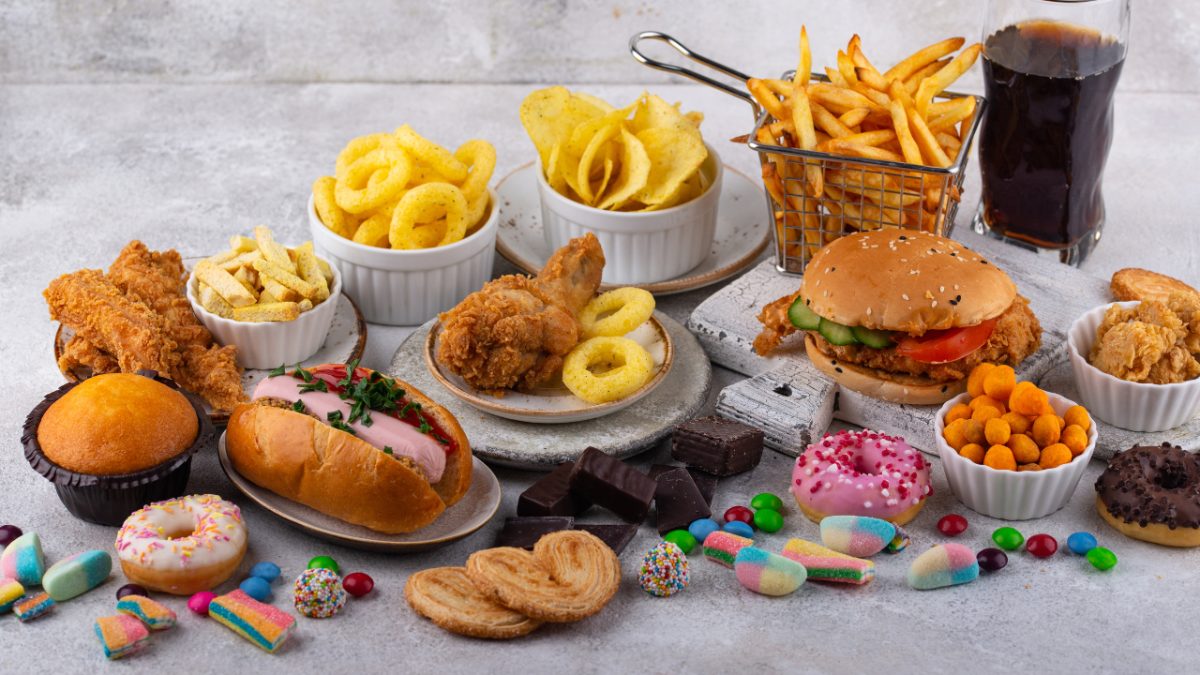
Do Ultra-Processed Foods Cause Weight Gain?
Learn the truth about ultra-processed foods from a registered dietitian.

The Best Way to Set Goals for Your Nutrition Strategy
Learn from an RDN how to effectively set nutrition goals that integrate into your lifestyle.

What is a DXA Scan?
Learn what a DXA scan is from a registered dietitian, including what it measures, how accurate it is, and why it can help track body composition and health.
Common questions
How much weight do I need to lose to improve my health?
Less than most people think. Losing 5–10% of body weight improves blood pressure, blood sugar, triglycerides and liver fat. For someone who weighs 220 lb, that’s 11–22 lb.
How fast should I lose weight?
About 0.5–1% of body weight per week for most people. Faster loss costs more muscle, makes training harder and is harder to sustain; slower loss lets you eat enough to train and live normally.
What is the best diet for weight loss?
The one you can stick to. In a large year-long trial comparing healthy low-fat and healthy low-carb diets, average weight loss was nearly identical. What matters is a calorie deficit you can sustain, enough protein, and habits that fit your schedule, tastes and culture.
How much protein should I eat to lose weight?
For most people who exercise and are losing weight, 1.6–2.2 g per kg of body weight per day (about 110–155 g for a 155 lb person). People with more body fat may need somewhat less; a body composition scan can fine-tune it.
Is BMI accurate?
BMI is a quick screening tool, but it can’t tell fat from muscle. Waist size (over 40 inches in men or 35 in women signals higher risk) and a DXA scan, which measures fat, muscle and visceral fat directly, give a much better picture.
Do I need nutrition help if I’m on a GLP-1 medication?
It helps. GLP-1 medications like semaglutide and tirzepatide are highly effective, but they reduce appetite so much that it is easy to under-eat protein. As with any weight loss, part of what is lost is lean tissue, including some muscle; the large drug trials did not include resistance training, which is the best-proven way to protect it. Enough protein, regular resistance training and habits you can keep if the medication stops all protect your results.
The sustainable weight loss course is coming
The Lifestyle Redesign: short, practical lessons on losing fat and keeping it off, from a registered dietitian. Join the list and you’ll hear first, with early access.
Want help now? One-to-one coaching builds a plan around your labs, your medications, your preferences and your life.
References
- Emmerich SD, et al. Obesity and severe obesity prevalence in adults: United States, August 2021–August 2023. NCHS Data Brief No. 508. 2024.
- Wing RR, et al. Benefits of modest weight loss in improving cardiovascular risk factors in overweight and obese individuals with type 2 diabetes. Diabetes Care. 2011;34(7):1481-1486.
- Garthe I, et al. Effect of two different weight-loss rates on body composition and strength and power-related performance in elite athletes. Int J Sport Nutr Exerc Metab. 2011;21(2):97-104.
- Helms ER, et al. A systematic review of dietary protein during caloric restriction in resistance trained lean athletes: a case for higher intakes. Int J Sport Nutr Exerc Metab. 2014;24(2):127-138.
- Gardner CD, et al. Effect of low-fat vs low-carbohydrate diet on 12-month weight loss in overweight adults (DIETFITS). JAMA. 2018;319(7):667-679.
- Hall KD, et al. Ultra-processed diets cause excess calorie intake and weight gain: an inpatient randomized controlled trial of ad libitum food intake. Cell Metab. 2019;30(1):67-77.
- Wilding JPH, et al. Once-weekly semaglutide in adults with overweight or obesity (STEP 1). N Engl J Med. 2021;384(11):989-1002.
- Look M, et al. Body composition changes during weight reduction with tirzepatide in the SURMOUNT-1 study of adults with obesity or overweight. Diabetes Obes Metab. 2025;27(5):2720-2729.
- Sattar N, et al. Tirzepatide and muscle composition changes in people with type 2 diabetes (SURPASS-3 MRI): a post-hoc analysis of a randomised, open-label, parallel-group, phase 3 trial. Lancet Diabetes Endocrinol. 2025;13(6):482-493.
- Hjelmesæth J, et al. Effect of semaglutide on thigh skeletal muscle volume, fat infiltration and physical function in people with obesity: secondary analysis of STEP UP. Diabetes Obes Metab. 2026. doi:10.1111/dom.71323.
- Neeland IJ, et al. Changes in lean body mass with glucagon-like peptide-1-based therapies and mitigation strategies. Diabetes Obes Metab. 2024;26(Suppl 4):16-27.
- Eisa N, Barood O. Lean mass changes with incretin therapy versus lifestyle intervention: a systematic review and meta-analysis of randomised controlled trials. Diabetes Obes Metab. 2026;28(6):4818-4827.
- Sardeli AV, et al. Resistance training prevents muscle loss induced by caloric restriction in obese elderly individuals: a systematic review and meta-analysis. Nutrients. 2018;10(4):423.
- Deller M, et al. Effects of calorie restriction with and without strength, endurance or mixed training on fat-free and skeletal muscle mass in overweight or obese individuals: a systematic review with pairwise and network meta-analysis. Diabetes Obes Metab. 2026;28(8):6810-6823.
- Lundgren JR, et al. Healthy weight loss maintenance with exercise, liraglutide, or both combined. N Engl J Med. 2021;384(18):1719-1730.
- Locatelli JC, et al. Incretin-based weight loss pharmacotherapy: can resistance exercise optimize changes in body composition? Diabetes Care. 2024;47(10):1718-1730.
- National Heart, Lung, and Blood Institute. Clinical Guidelines on the Identification, Evaluation, and Treatment of Overweight and Obesity in Adults. NIH; 1998.
Educational information, not individual medical advice. See the medical disclaimer, and talk with your doctor before making major changes, especially if you take medication for this condition.