
Avoiding Over-Restriction During Weight Loss

Over-restriction is one of the most common problems people run into when starting a weight loss plan. The logic makes sense, “If I eat less, then I will lose weight more quickly, and get to my end-goal faster.” This combined with a high level of motivation at the beginning of a weight loss phase can lead folks to starting off a little over zealous.
The first issue is sustainability. Most people can grit their teeth and push through for a short period, but the aggressive nature of this approach often leads to decreases in energy levels, a harder time maintaining focus, and a build-up of hunger and cravings. This often causes a slingshot-like effect, where the over-restriction snaps back the other direction and leads to over-indulgence. Which of course can be terribly demotivating, and oftentimes set folks back to square one (or worse).
Another problem is the loss of flexibility. Food is tied to nearly every aspect of life—social gatherings, family meals, cultural practices, even small daily routines like having a morning coffee. Overly rigid rules create constant friction with real life. Missing out repeatedly can lead to frustration and resentment, which only makes sticking to the diet harder.
There’s also a physical cost. When calories are cut too drastically, the body adapts. Metabolism can slow down, strength and performance can decline, and muscle mass may be lost along with fat. In the long run, this makes it even harder to maintain progress.
The real path forward isn’t about eliminating every enjoyable food or dropping to the lowest possible intake. Instead, it’s about finding a level of structure that works with your life. A moderate, individualized approach allows room for flexibility while still respecting the principle of energy balance. That balance matters—calories in versus calories out will always play a role—but how you get there needs to fit your preferences, habits, and lifestyle.
The goal should be directional improvements you can live with, not perfection you can’t maintain.
At Redesign Nutrition, we focus on helping people find that middle ground. By individualizing the process, we give you the tools to avoid the trap of over-restriction and create a foundation that works long term.
Check out The Lifestyle Redesign – Sustainable Weight Loss course and start building the nutritional foundation you need to maintain your weight loss for life!
Sincerely,
Kevin Rogers, RDN, LD
Founder | Redesign Nutrition
Frequently asked questions
Why does eating very little backfire?
Aggressive restriction usually lowers energy and focus and builds hunger and cravings, which often snaps back into over-eating and can set you back to square one or worse.
Can cutting calories too much cost me muscle?
Yes. When calories are cut too drastically, metabolism can slow, strength and performance can decline, and muscle can be lost along with fat.
Do calories still matter if I eat more moderately?
Yes. Energy balance always plays a role, but how you create the deficit needs to fit your preferences, habits and lifestyle.
What is a better approach to weight loss?
A moderate, individualized plan with enough structure to make progress and enough flexibility to live your life. Aim for directional improvements you can keep.
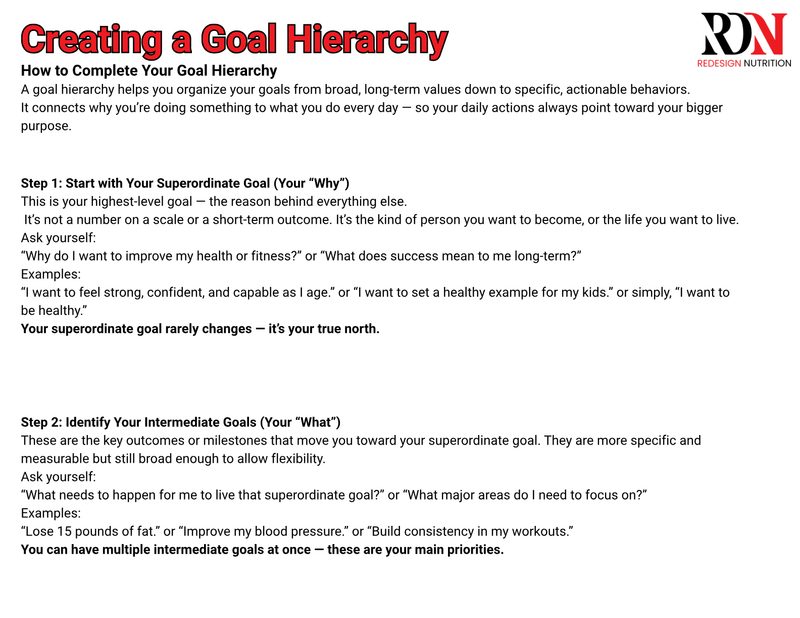
The Goal Hierarchy Worksheet
The goal-setting system used inside the Lifestyle Redesign course: connect your daily habits to the reason you started.
Instant download. You'll also get occasional nutrition tips; unsubscribe anytime. Privacy
Educational content written by a registered dietitian, not individual medical advice. See the medical disclaimer.