
Losing Weight Fast – 3 Reasons to Not

It’s common to want fast results when starting a weight loss journey. The idea of seeing the number on the scale drop quickly can be exciting and motivating. But while rapid changes can look like progress, the truth is that not all weight loss represents what most people actually want—fat loss.
Below are three key downsides to losing weight too quickly, and why slowing things down often leads to better, more sustainable results.
1. Restrictive Diets Lead to Short-Lived Results
Fast weight loss usually requires strict dieting. That can mean cutting out favorite foods, skipping social events, or saying no to holiday gatherings because there simply isn’t room for that amount of flexibility when staying on target. Hunger increases, energy drops, and life starts revolving around food rules instead of living normally.
While this kind of restriction might work for a few weeks, it’s rarely sustainable. Eventually, the discomfort builds up, and old habits return, often leading to regaining the weight that was lost.
2. You Risk Losing Muscle and Training Quality
While it is certainly possible to gain lean tissue when dieting, the faster the rate of weight loss, the higher the risk that you will actually lose lean tissue in addition to fat tissue. And while it can be exciting to see the scale number decrease more quickly, this may end up hindering weight loss efforts in the future, since lean tissue tends to be more metabolically active than fat tissue.
On top of that, aggressive dieting can make training sessions feel harder and recovery slower. And your resistance training sessions are by far the most potent stimulus for building or preserving muscle mass. With less energy and fewer nutrients available, there is a greater chance you will compromise the quality of your training sessions - meaning less stimulus on the muscle to grow.
3. Transitioning to Maintenance
Many aggressive weight loss tactics are just that - tactics. Meal replacement shakes, extreme cardio routines, or strict food lists. The more aggressively you lose weight, the more dissimilar these look to what your long-term routine will actually look like.
Not everything you do during a weight loss phase is going to persist long term, but a good strategy should help to build a foundation of habits and routines that make for an easy transition into maintenance. The more obscure or disruptive the methods, the less likely you will be to maintain them.
A Better Approach
A moderate pace allows for more flexibility, better health outcomes, and results that last. It gives you time to experiment, iterate, make adjustments, and build a system that fits your lifestyle.
At Redesign Nutrition, our courses are built around this principle. We guide you through understanding your body, lifestyle, preferences, and goals to find the most effective and sustainable route for you. Because the goal isn’t just to lose weight, it’s to learn how to keep it off for good.
Sincerely,
Kevin Rogers, RDN, LD
Founder | Redesign Nutrition
Frequently asked questions
Why is losing weight fast a bad idea?
It requires restrictive dieting that is hard to keep up, it increases the risk of losing muscle, and it relies on tactics you will not keep once you reach maintenance.
Does losing weight quickly cause muscle loss?
The faster the rate of loss, the greater the risk of losing lean tissue along with fat. Aggressive dieting can also make training harder and recovery slower.
How do I keep weight off after losing it?
Lose it with habits and routines you can carry into maintenance. The more extreme or disruptive the methods, the less likely you are to maintain them.
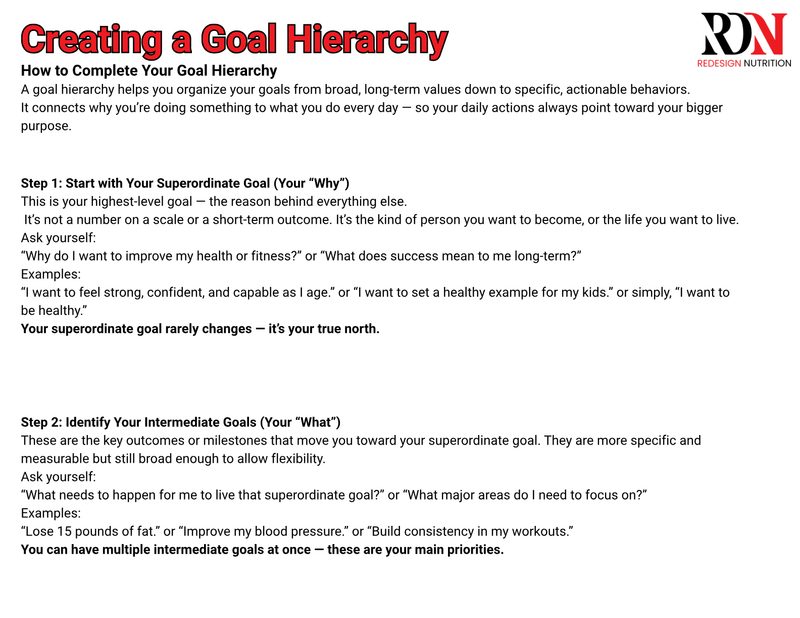
The Goal Hierarchy Worksheet
The goal-setting system used inside the Lifestyle Redesign course: connect your daily habits to the reason you started.
Instant download. You'll also get occasional nutrition tips; unsubscribe anytime. Privacy
Educational content written by a registered dietitian, not individual medical advice. See the medical disclaimer.